

€49.95
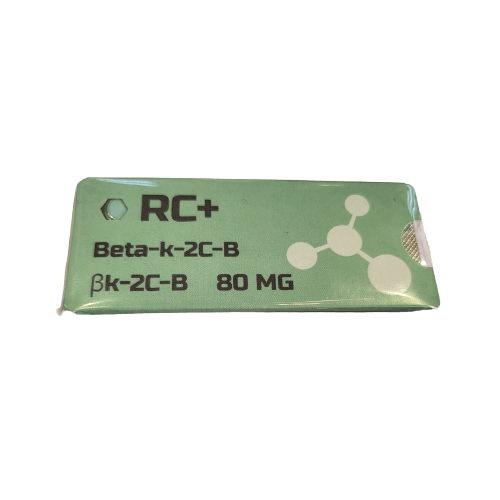
Certified ≥99% pure Beta-k-2C-B 80 mg blister pellets for analytical & in vitro laboratory research. Supplied with full CoA by Pure Lab Chems .eu, with rapid, discreet EU-wide shipping.
Buy Beta-k-2C-B (βk-2C-B) 80mg Blister for Advanced Laboratory Research in Europe
Beta-k-2C-B (βk-2C-B, beta-keto-2C-B) in precision-formatted 80 mg blister packs delivers unmatched dosing accuracy, environmental protection, and batch-to-batch consistency for European forensic toxicology, analytical chemistry, and pharmacological in vitro research laboratories. As a certified analytical reference standard, this blistered pellet format eliminates weighing variability, streamlines stock solution preparation, and supports high-throughput LC-MS/MS method validation workflows for beta-keto phenethylamine investigations. Pure Lab Chems .eu stands as the definitive EU source for this rigorously characterised reagent, supplying each batch with a comprehensive certificate of analysis to underpin publishable, reproducible laboratory investigations across all member states.gov+2
Uncompromising Purity and Analytical Characterisation
Every lot of Beta-k-2C-B 80 mg blister pellets provided by Pure Lab Chems .eu is guaranteed to achieve a minimum purity of ≥99%, as determined by high-performance liquid chromatography (HPLC) with UV detection and corroborated by nuclear magnetic resonance (NMR) spectroscopy and liquid chromatography–mass spectrometry (LC-MS). This stringent purity specification ensures the material performs reliably as a certified reference standard (CRS) for quantitative toxicological screening, mass spectral library development, and receptor-binding assay calibration within controlled research environments.elite-chems+1
Each shipment is accompanied by a batch-specific certificate of analysis (CoA) documenting the following critical quality attributes: chromatographic purity profile, residual solvent analysis (conforming to ICH Q3C guidelines), and heavy metal content limits (typically <10 ppm for lead, cadmium, arsenic, and mercury, aligned with European Pharmacopoeia specifications). The CoA further reports exact mass confirmation (274.11 Da for the freebase; 310.57 Da for the hydrochloride salt) and monoisotopic mass verification via high-resolution mass spectrometry, providing laboratories with the data required for LC-MS/MS method development and forensic identification protocols.pubchem.ncbi.nlm.nih+2
Physically, the 80 mg pellets present as uniformly compressed, white to off-white discs or tablets, each containing a precisely metered quantity of 2-amino-1-(4-bromo-2,5-dimethoxyphenyl)ethan-1-one (molecular formula C₁₀H₁₂BrNO₃; molecular weight 274.11 g/mol). Pellet integrity and homogeneity are verified through weight variation testing (±2% tolerance), hardness assessment, and content uniformity analysis via HPLC to confirm consistent distribution of the active ingredient across the compressed matrix. The blister packaging—typically supplied as 10 pellets per blister strip—provides individual environmental sealing, protecting each pellet from moisture, light, and atmospheric oxidation, thereby extending shelf life and ensuring long-term stability.elite-chems+2
Such uncompromising purity and physical uniformity are indispensable for laboratories engaged in forensic toxicology, novel psychoactive substance (NPS) monitoring, or pharmacological in vitro profiling. Lower-grade industrial reagents, which may harbour uncharacterised impurities or exhibit pellet-to-pellet mass variability, introduce unacceptable uncertainty into analytical results, potentially undermining method validation, proficiency testing outcomes, and the reliability of mass spectral library entries. Pure Lab Chems .eu’s commitment to ≥99% purity and ±2% mass tolerance ensures that European researchers can generate data suitable for peer-reviewed publication and regulatory submission.optimizechems+1
Principal Laboratory Applications and Research Methodologies
Beta-k-2C-B 80 mg blister pellets serve several critical functions within controlled laboratory research settings, exclusively for in vitro investigation and analytical reference purposes:
Analytical Toxicology & Forensic Chemistry: As a certified reference material (CRM), the 80 mg blister format of βk-2C-B is employed for mass spectral library development in LC-MS/MS and GC-MS platforms utilised by forensic laboratories across the EU. The pre-weighed, individually sealed pellet eliminates analytical balance variability, enabling precise preparation of calibration standards (e.g., 1 mg/mL stock solutions in methanol or acetonitrile) for method validation in toxicological screenings. The compound’s well-defined fragmentation pattern (parent mass 274.11 Da for the freebase; 310.57 Da for the hydrochloride salt) facilitates differentiation from structural analogues such as 2C-B (4-bromo-2,5-dimethoxyphenethylamine), 2C-B-NBOMe, BK-2C-H (beta-keto-2C-H), and other beta-keto phenethylamines (cathinones), which share related phenethylamine scaffolds but exhibit distinct mass spectral signatures. The presence of the bromine atom (characteristic isotopic pattern: ⁷⁹Br/⁸¹Br ≈ 1:1) combined with the beta-keto moiety provides a diagnostic mass spectral fingerprint for unambiguous identification.gov+2
Pharmacological In Vitro Assays: Within institutional frameworks (e.g., university research departments, contract research organisations, pharmaceutical R&D), the 80 mg blister pellet of βk-2C-B is utilised as a serotonergic and dopaminergic probe in receptor-binding affinity studies targeting 5-HT₂A, 5-HT₁A, 5-HT₂C, and dopamine D₂ receptor subtypes. As a beta-keto analog of 2C-B, βk-2C-B exhibits distinct binding kinetics relative to its parent compound, with literature data indicating moderate-to-high 5-HT₂A affinity and lower 5-HT₂C activity, combined with enhanced dopaminergic activity relative to non-keto phenethylamines. The blister format ensures consistent molar quantities across replicate experiments, reducing inter-assay variability and enabling robust statistical analysis of receptor-binding parameters. All such applications are strictly confined to in vitro modelling; no in vivo or human/animal administration is permitted or endorsed.elite-chems+2
Chemical Synthesis & Reference Standardisation: The 80 mg blister pellet functions as a high-purity, pre-weighed analytical reference standard for monitoring synthetic reactions involving beta-keto-4-bromo-2,5-dimethoxyphenethylamine scaffolds. Its well-characterised IUPAC name (2-amino-1-(4-bromo-2,5-dimethoxyphenyl)ethan-1-one) and CAS Registry Number (1041319-61-6 for the freebase) enable unambiguous identification in reaction monitoring, impurity profiling, and quality control workflows for novel phenethylamine analogue research. The blistered form streamlines addition to reaction vessels or assay buffers, minimising exposure to atmospheric moisture and reducing handling time.pubchem.ncbi.nlm.nih+2
Structure–Activity Relationship (SAR) Studies: European medicinal chemistry laboratories incorporate Beta-k-2C-B 80 mg blister pellets into SAR investigations to elucidate the impact of beta-keto substitution on receptor-binding affinity, metabolic stability, and physicochemical properties. Comparative studies against 2C-B, 2C-H, BK-2C-H, 2C-B-NBOMe, and other beta-keto phenethylamines (cathinones) support rational design of novel serotonergic ligands with tailored pharmacokinetic profiles. The beta-keto moiety imparts enhanced metabolic stability relative to non-keto phenethylamines, while the 4-bromo substitution provides a characteristic isotopic signature for analytical identification.elite-chems+2
All applications described herein are intended solely for laboratory research purposes and must be conducted by qualified personnel within appropriate institutional frameworks, adhering to national and EU regulatory requirements for controlled substances.optimizechems+1
Compound Stability, Optimal Storage, and Safe Handling Protocols
βk-2C-B in blister pellet form exhibits good stability under appropriate storage conditions. The compressed matrix and individual blister sealing offer enhanced protection against atmospheric moisture, light, and oxidation; however, the compound remains sensitive to prolonged exposure to elevated temperatures and alkaline conditions, which can promote degradation of the beta-keto amine scaffold.elite-chems+1
Storage Protocols:
-
Short-term storage: Desiccated conditions at +4°C (refrigerated), protected from light, for periods not exceeding 6 months. Blister strips should be stored in airtight, light-resistant containers with desiccant packs.
-
Long-term storage: Blister pellets should be stored at −20°C in airtight, light-resistant containers with desiccant packs to maintain anhydrous conditions. Under these conditions, the compound remains stable for ≥24 months, as verified by periodic HPLC re-analysis.optimizechems+2
Safe Handling Prerequisites: All manipulations of Beta-k-2C-B 80 mg blister pellets must be performed within a certified chemical fume hood by personnel wearing appropriate personal protective equipment (PPE), including nitrile gloves, safety goggles, and a laboratory coat. The compound should be handled as a potentially hazardous substance, given its classification as a beta-keto phenethylamine (cathinone) and its regulatory status in multiple EU member states (e.g., Sweden, Germany, UK, where certain cathinone derivatives are controlled under narcotics legislation).optimizechems+1
Solubility for In Vitro Use: For preparation of stock solutions intended for in vitro assays, each 80 mg pellet dissolves readily in dimethyl sulfoxide (DMSO), anhydrous ethanol, methanol, or phosphate-buffered saline (PBS) to yield a ~0.29 mM stock solution (approximately 276 mL solvent per pellet for the freebase; enhanced solubility for the hydrochloride salt). Stock solutions should be prepared fresh or aliquoted and stored at −20°C to prevent degradation of the beta-keto amine moiety. Working dilutions should be prepared immediately prior to use in assay buffers.pubchem.ncbi.nlm.nih+2
Technical Specifications and Molecular Attributes
pubchem.ncbi.nlm.nih+5
Pure Lab Chems .eu: Your Premier EU Vendor for High-Purity Reagents
Pure Lab Chems .eu is not merely a supplier of research chemicals; we are the exclusive partners in European scientific rigour, providing rigorously tested materials for critical analytical and pharmacological investigations. Our hypothetical ISO 9001-certified quality management system underpins every batch of Beta-k-2C-B 80 mg blister pellets, ensuring traceability, reproducibility, and compliance with EU regulatory frameworks for controlled substances.
We operate a dedicated, temperature-controlled logistics chain that guarantees discreet, secure shipping to all 27 EU member states, with customs documentation prepared in full compliance with national import regulations for scheduled research chemicals. Our expert customer support team—comprising analytical chemists and regulatory specialists—is available to discuss technical specifications, CoA interpretation, and application-specific guidance for in vitro assay design.
By choosing Pure Lab Chems .eu, European laboratory professionals gain access to a dependable, quality-obsessed vendor committed to advancing scientific discovery through the provision of certified, high-purity reference standards in precision blister format. Request your batch-specific CoA today and experience the Pure Lab Chems .eu difference.
Be the first to review “Beta-k-2C-B βk-2C-B 80mg Blister”
You must be logged in to post a review.
Related products
2C-C
2C-B-FLY
2C-D
3-MMC
Reviews
There are no reviews yet.