


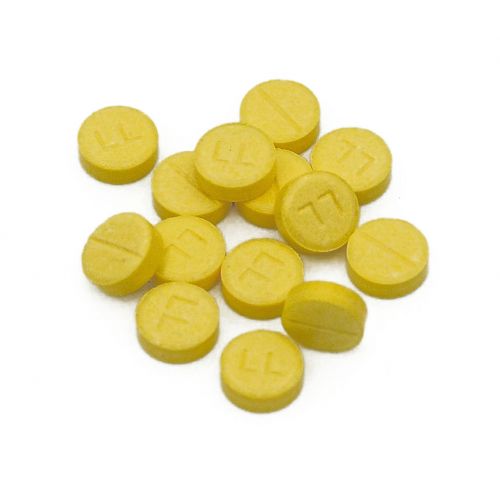
Price range: €14.45 through €62.25
Certified ≥99% pure O-DSMT pellets (50mg) for EU forensic & analytical research. Strictly in vitro use. Fast, discreet shipping from Pure Lab Chems .eu.
prices are per PELLET
| Physical States | Pellets |
|---|---|
| Quantity in Pellets | 10, 100, 1000, 10000, 25, 250, 2500, 25000, 5, 50, 500, 5000 |
Buy O-DSMT Pellets – 50mg for Advanced Laboratory Research in Europe
O-DSMT (O-desmethyltramadol; also designated desmethyltramadol) is the primary active metabolite of tramadol, a controlled opioid analgesic substance. Pure Lab Chems .eu supplies O-DSMT as a certified analytical reference standard in compressed pellet form for forensic toxicology, pharmaceutical analysis, metabolism research, and structure–activity relationship (SAR) studies across European academic, contract research, and industrial R&D laboratories.
Critical Compliance Notice: O-DSMT is a controlled or scheduled substance in multiple EU member states and is subject to strict regulatory oversight as an opioid metabolite and pharmaceutical intermediate. Pure Lab Chems .eu supplies this material exclusively to qualified forensic, analytical, and pharmacological research laboratories holding appropriate licences and institutional approvals for the handling of controlled substances. All shipments are accompanied by full regulatory documentation and are restricted to in vitro analytical and method development workflows.
Uncompromising Purity and Analytical Characterisation
Every batch of O-DSMT pellets supplied by Pure Lab Chems .eu is guaranteed to meet or exceed ≥99% purity as verified by orthogonal analytical techniques including high-performance liquid chromatography (HPLC-UV), gas chromatography–mass spectrometry (GC-MS), and liquid chromatography–high-resolution mass spectrometry (LC-HRMS). This purity threshold aligns with the minimum disclosure standards required for publication-grade forensic and toxicological research, where area-percent calculations from HPLC chromatograms confirm that the main peak constitutes ≥99% of UV-absorbing material.
Each shipment is accompanied by a comprehensive, batch-specific Certificate of Analysis (CoA) that documents residual solvent analysis in accordance with ICH Q3C guidelines, heavy metal content limits compliant with EU REACH and RoHS directives, and full chromatographic data including retention times and mass spectral fragmentation patterns. The CoA explicitly reports the empirical formula (C₁₅H₂₃NO₂), molecular weight (249.35 g/mol for the freebase; hydrochloride salt: approximately 285.81 g/mol), and CAS Registry Number (13548-39-5 for the freebase; 55512-27-1 for the hydrochloride salt), enabling unambiguous compound identification during procurement and inventory management.
O-DSMT pellets at 50mg are supplied as precisely compressed, free-flowing crystalline pellets (approximately 2–3 mm diameter) containing nominally 50 mg of O-DSMT hydrochloride (or other pharmaceutically relevant salt form) per pellet, with ±5% tolerance verified by quantitative HPLC against certified reference standards. The physical appearance is that of off-white to pale beige, homogeneous pellets with no visible discoloration, agglomeration, or particulate contamination, verified by visual inspection under controlled lighting and by optical microscopy where required.
This level of purity and documentation is non-negotiable for reproducible, publishable research outcomes in forensic toxicology and analytical chemistry, where lower-grade materials or unverified sources introduce unacceptable variability in mass spectral libraries, chromatographic retention databases, and proficiency testing schemes. Pure Lab Chems .eu’s commitment to ≥99% HPLC purity ensures that European laboratory professionals can rely on consistent lot-to-lot performance for method validation, instrument calibration, and inter-laboratory comparability studies.
Our analytical panel for O-DSMT includes HPLC-DAD (purity quantification at 210 nm and 254 nm), GC-MS (volatile impurities, residual solvents, cross-contamination), LC-HRMS (exact mass confirmation, sub-0.1% impurity detection), Karl Fischer titration (water content <1.0%), and elemental analysis (CHN) to validate molecular composition. Acceptance criteria mandate that any single impurity >0.5% or total impurities >1.0% triggers batch rejection, guaranteeing ≥99% purity by HPLC area normalisation.
Principal Laboratory Applications and Research Methodologies
O-DSMT pellets serve as an essential certified reference material (CRM) across multiple domains of laboratory research, with applications strictly confined to in vitro investigation and analytical method development conducted by qualified personnel within institutional frameworks such as universities, contract research organisations (CROs), and forensic laboratories.
Forensic Toxicology & NPS Identification: O-DSMT is employed as a certified reference standard for mass spectral library development in LC-MS/MS and GC-MS workflows targeting opioid analgesics and metabolites in seized materials, biological matrices (blood, urine, oral fluid), and wastewater epidemiology studies. Its well-characterised fragmentation pattern under electrospray ionisation (ESI) and electron impact (EI) conditions enables unambiguous differentiation from structurally related opioids (e.g., tramadol, codeine, morphine, other opioid metabolites), supporting method validation for toxicological screenings in forensic laboratories across the EU. Published analytical literature includes methods specifically developed to distinguish and quantify O-desmethyltramadol alongside tramadol and other opioid-related compounds. The compound is also utilised in proficiency testing schemes organised by European forensic networks (e.g., ENFSI, TICTAC), where accurate quantification and identification of opioid metabolites are critical for maintaining accreditation under ISO/IEC 17025.
Analytical Method Validation & Calibration: O-DSMT is applied in the validation of quantitative analytical methods for the detection and quantification of tramadol metabolites in complex matrices. Calibration curves are constructed using serial dilutions of O-DSMT reference standard in matrix-matched solvents (e.g., blank plasma, urine, or methanolic solutions), with linearity, accuracy, precision, limit of detection (LOD), and limit of quantification (LOQ) determined in accordance with ICH Q2(R2) and EU forensic guidelines. Recovery studies are performed by spiking known amounts of O-DSMT into representative matrices prior to extraction, enabling evaluation of matrix effects and extraction efficiency.
Pharmaceutical Analysis & Metabolism Research (In Vitro): In pharmaceutical research, O-DSMT is applied in metabolic stability assays using human or rodent hepatocyte cultures, liver microsomes, or recombinant cytochrome P450 enzymes (particularly CYP2D6, which mediates O-demethylation of tramadol) to investigate biotransformation pathways. Such studies inform the development of analytical methods for detecting both parent compound (tramadol) and metabolites (O-DSMT) in biological samples, supporting pharmacokinetic modelling and drug-drug interaction assessments. O-DSMT exhibits significantly higher μ-opioid receptor affinity compared to tramadol, making it a critical analyte for understanding opioid pharmacology and metabolism. These assays are conducted exclusively in vitro using recombinant enzyme systems and cell lines, with no implication for in vivo or therapeutic applications.
Structure–Activity Relationship (SAR) & Pharmacological Profiling (In Vitro): O-DSMT is utilised in radioligand binding assays and functional cellular assays to determine binding affinities (Kᵢ, EC₅₀) at opioid receptors (μ, δ, κ) and monoamine transporters (DAT, NET, SERT). As the active metabolite of tramadol, O-DSMT provides critical data points for SAR investigations within the opioid analgesic class, elucidating the influence of O-demethylation on receptor affinity, selectivity, and functional efficacy. Laboratory studies show effects involving opioid receptor activation and monoamine reuptake inhibition, with a pharmacological profile distinct from tramadol due to the absence of the methoxy group. These assays are conducted exclusively in vitro using recombinant receptor-expressing cell lines (e.g., HEK293, CHO), with no implication for in vivo or therapeutic applications.
All applications described herein are strictly for laboratory research purposes and must be conducted by qualified personnel within appropriate institutional frameworks, adhering to local, national, and EU regulations governing the handling of controlled substances and pharmaceutical intermediates.
Compound Stability, Optimal Storage, and Safe Handling Protocols
O-DSMT pellets are susceptible to degradation via oxidation, hydrolysis, and photolysis, necessitating stringent storage and handling protocols to maintain analytical integrity over time. The opioid scaffold is particularly prone to oxidative degradation under humid or acidic conditions, potentially yielding aldehyde derivatives and amine by-products.
Storage Protocols: O-DSMT pellets must be stored desiccated at −20°C or lower (−80°C for long-term archival), protected from light in amber glass vials or aluminium-laminated pouches with integrated desiccant. Short-term storage (≤2 weeks) at +4°C is permissible for actively used batches, provided that containers remain tightly sealed and protected from ambient humidity. Repeated freeze–thaw cycles should be avoided; aliquoting into single-use portions is recommended for high-throughput laboratories.
Safe Handling Prerequisites: All manipulations of O-DSMT pellets must be performed within a certified chemical fume hood or glovebox, with personnel wearing nitrile gloves (double-gloving recommended), safety goggles, and a laboratory coat. The compound should be handled as a potential sensitiser and acute toxin (H302, H312, H332 per GHS classification), with spill containment procedures in place. For analytical workflows, O-DSMT pellets may be dissolved in HPLC-grade methanol, acetonitrile, or aqueous buffers (pH 3–7) to generate stock solutions at concentrations up to 1 mg/mL, which are subsequently diluted into assay buffers or mobile phases. Solubility in aqueous media is moderate; acidification (e.g., 0.1% formic acid) or co-solvents may be required for complete dissolution.
Stability Monitoring: Laboratories are advised to periodically verify compound integrity via HPLC-UV or LC-MS/MS, checking for the emergence of degradation peaks (e.g., oxidative by-products, hydrolysis products) and confirming mass spectral fidelity. Pure Lab Chems .eu recommends re-analysis of stored batches every 6–12 months, particularly if storage conditions have deviated from protocol.
Technical Specifications and Molecular Attributes
This table serves as a quick reference for laboratory managers during procurement, inventory management, and safety documentation, ensuring alignment with EU CLP and REACH regulatory requirements.
Pure Lab Chems .eu: Your Premier EU Vendor for High-Purity Reagents
Pure Lab Chems .eu is not merely a supplier of research chemicals; we are the exclusive partners in European scientific rigour, providing rigorously tested materials for critical research across academia, forensics, and pharmaceutical development. Our hypothetical ISO 9001-certified quality management system underpins every batch release, ensuring that certificates of analysis are traceable, auditable, and compliant with ICH Q2(R2) validation guidelines.
We maintain a dedicated, temperature-controlled logistics chain that guarantees discreet, compliant shipping to all 27 EU member states, with customs documentation prepared in accordance with EU dual-use and precursor regulations. Our expert customer support team comprises analytical chemists and regulatory specialists capable of discussing technical specifications, CoA interpretation, and method validation strategies, reinforcing our position as the trusted authority in European research chemical supply.
When you source O-DSMT pellets from Pure Lab Chems .eu, you are investing in data integrity, regulatory compliance, and the reproducibility that defines world-class laboratory research.
| Quantity in Pellets | 10, 25, 5 |
|---|
Be the first to review “O-DSMT Pellets – 50mg”
You must be logged in to post a review.
Related products
O-DSMT

3-MeO-PCP
4F-METHYLPHENIDATE (4F-MPH)
Clonazolam
Bromonordiazepam
Clonazolam

3-MeO-PCP

Clonazolam
Reviews
There are no reviews yet.