
Price range: €63.80 through €12,500.00
Certified ≥99% purity ADB-BUTINACA for forensic toxicology and in vitro cannabinoid receptor research. Pure Lab Chems .eu supplies analytical-grade reference standards with fast, discreet EU-wide shipping. Request your CoA today.
Prices are per gram
| Physical States | Powders |
|---|---|
| Quantity in gram | 10, 100, 1000, 2, 25, 250, 5, 50, 500 |
Buy ADB-BUTINACA for Advanced Laboratory Research in Europe
ADB-BUTINACA, systematically designated as N-[(1S)-1-(aminocarbonyl)-2,2-dimethylpropyl]-1-butyl-1H-indazole-3-carboxamide, represents a critical indazole-derived synthetic cannabinoid receptor agonist (SCRA) reference standard essential for contemporary forensic toxicology, receptor pharmacology, and mass spectral library development across European laboratory settings. Pure Lab Chems .eu serves as the definitive EU source for this rigorously characterised compound, supplying analytical-grade materials exclusively to qualified research institutions, contract research organisations, and pharmaceutical R&D facilities throughout the European Union.unodc+2
Uncompromising Purity and Analytical Characterisation
Every batch of ADB-BUTINACA supplied by Pure Lab Chems .eu is guaranteed to achieve a minimum purity of ≥99%, as verified through high-performance liquid chromatography (HPLC) with UV detection and confirmed via liquid chromatography–tandem mass spectrometry (LC-MS/MS) or gas chromatography–mass spectrometry (GC-MS) where appropriate. This exceptional purity threshold is non-negotiable for producing reproducible, publishable research outcomes in forensic reference material applications, where even minor impurities can compromise method validation protocols, proficiency testing schemes, and quantitative bioanalytical accuracy in complex biological matrices.caymanchem
Each shipment is accompanied by a comprehensive Certificate of Analysis (CoA) documenting batch-specific analytical data, including HPLC chromatograms, retention times, peak purity assessments, and enantiomeric excess verification for the pharmacologically active (S)-enantiomer. The CoA further specifies residual solvent analysis in accordance with ICH Q3C guidelines, with individual solvent limits conforming to European Pharmacopoeia standards, alongside heavy metal content verification ensuring compliance with ICH Q3D elemental impurities thresholds (typically <10 ppm for lead, cadmium, arsenic, and mercury combined).cdn.who+2
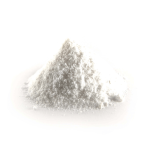
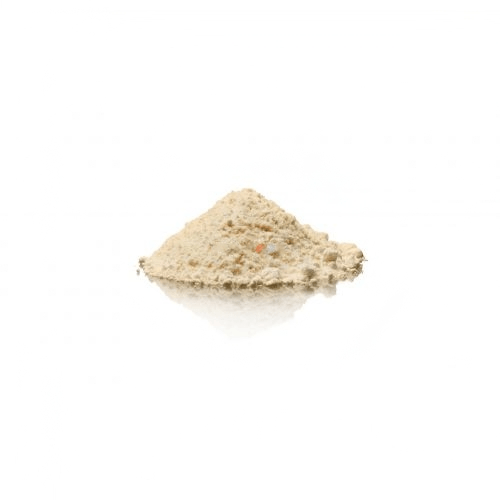
ADB-BUTINACA presents as a white to off-white crystalline solid or lyophilised powder, depending on the specific processing methodology and salt form. This physical appearance is verified through visual inspection under controlled lighting conditions and documented via high-resolution photography for batch records. The crystalline nature may be further confirmed through powder X-ray diffraction (PXRD) or differential scanning calorimetry (DSC) upon request for advanced characterisation requirements, with melting point determination providing additional batch-to-batch consistency verification.lgcstandards
The distinction between our analytical-grade ADB-BUTINACA and lower-grade industrial reagents cannot be overstated. Industrial-grade materials, often sourced from non-specialised suppliers, typically exhibit purity levels of 90–95% with undefined impurity profiles and potential racemic mixtures, rendering them unsuitable for certified reference material (CRM) applications, mass spectral library development, or quantitative method validation in forensic toxicology laboratories. Pure Lab Chems .eu’s commitment to ≥99% purity with fully characterised impurity profiles and verified (S)-enantiomeric configuration ensures that European laboratory professionals can rely on our materials for regulatory-compliant analytical workflows, inter-laboratory comparison studies, and ISO/IEC 17025-accredited testing protocols.cdn.who+3
Principal Laboratory Applications and Research Methodologies
Forensic Toxicology and Mass Spectral Library Development: ADB-BUTINACA serves as an essential certified reference material for the development and validation of LC-MS/MS and GC-MS analytical methods in forensic toxicology laboratories across the European Union. The compound is utilised for constructing mass spectral libraries, establishing retention time databases, and performing proficiency testing schemes mandated by organisations such as the Society of Toxicological and Forensic Chemistry (GTFCh), the European Monitoring Centre for Drugs and Drug Addiction (EMCDDA), and the Scientific Working Group for Forensic Toxicology (SWGTOX). Analytical chemists employ ADB-BUTINACA reference standards to validate selectivity, linearity, accuracy, precision, limit of detection (LOD), and limit of quantification (LOQ) parameters in accordance with ANSI/ASB Standard 036 guidelines for forensic toxicology method validation. The compound has been successfully quantified in complex biological matrices including whole blood, plasma, urine, hair, and post-mortem tissue samples using validated UPLC-MS/MS methodologies with LODs ranging from 0.5 to 5 pg/mg in hair specimens.pubmed.ncbi.nlm.nih+5
Analytical Reference Standard for Quantitative Bioanalysis: In clinical and forensic bioanalytical laboratories, ADB-BUTINACA functions as a calibration standard for the quantitative determination of this synthetic cannabinoid receptor agonist in complex biological matrices. The reference material enables the construction of calibration curves spanning typical analytical ranges (e.g., 1–1,000 ng/mL in plasma or serum), facilitates recovery studies, and supports matrix effect evaluations critical for LC-MS/MS method validation. This application is strictly confined to in vitro analytical modelling and must be conducted by qualified personnel within appropriately accredited laboratory environments. ADB-BUTINACA has been detected in seized materials and post-mortem specimens, underscoring its importance as a forensic reference standard for accurate identification and quantification in toxicological investigations.pubmed.ncbi.nlm.nih+4
In Vitro Cannabinoid Receptor-Binding and Functional Assays: Within controlled pharmacological research settings, ADB-BUTINACA serves as a research tool for in vitro receptor-binding affinity investigations and functional activity profiling at human cannabinoid receptors CB₁ and CB₂. The (S)-enantiomer demonstrates high-affinity binding to CB₁ receptors (Kᵢ values in the sub-nanomolar to low nanomolar range) and functions as a high-efficacy full agonist in fluorescence-based membrane potential assays, β-arrestin 2 recruitment assays (NanoBiT®), and [³⁵S]-GTPγS binding assays. Cellular functional assays employing AtT20 cells or HEK293 lines transfected with human CB₁ or CB₂ receptors utilise ADB-BUTINACA reference standards to establish concentration–response relationships, with reported EC₅₀ values of 0.67 nM at CB₁ and 4.1 nM at CB₂ receptors in membrane potential assays. All such investigations are expressly for in vitro modelling purposes only and must be performed within institutional frameworks governing controlled substance research, such as university pharmacology departments or contract research organisations specialising in neuropharmacological screening.pubs.rsc+6
Chemical Synthesis and Structure–Activity Relationship Studies: ADB-BUTINACA functions as a high-purity building block and analytical reference standard for monitoring synthetic transformations in organic chemistry laboratories investigating structure–activity relationships (SAR) of indazole-derived synthetic cannabinoid receptor agonists. The compound may serve as a starting material for the synthesis of halogenated analogues (e.g., ADB-5′Br-BUTINACA, ADB-5′F-BUTINACA), as a reference standard for tracking reaction progress via HPLC or TLC, or as a comparator in SAR studies evaluating the impact of tail modifications, head group substitutions, and core heterocycle variations on cannabinoid receptor affinity and functional efficacy. The well-characterised purity profile and verified (S)-stereochemistry ensure that synthetic outcomes and pharmacological data are attributable to intended molecular structures rather than impurity-driven artefacts or racemic contamination, a critical consideration for publications in peer-reviewed chemical and pharmacological literature.cdn.who+3
All applications described herein are strictly for laboratory research purposes and must be conducted by qualified analytical chemists, biochemists, or pharmacologists within appropriate institutional frameworks, including universities, pharmaceutical R&D facilities, forensic laboratories, or ISO-accredited contract research organisations. Pure Lab Chems .eu supplies ADB-BUTINACA exclusively to entities capable of demonstrating legitimate research requirements and regulatory compliance within the European Union.
Compound Stability, Optimal Storage, and Safe Handling Protocols
ADB-BUTINACA exhibits moderate susceptibility to degradation via moisture absorption, oxidation, and photolytic pathways, necessitating stringent storage and handling protocols to preserve analytical integrity over extended periods. The compound demonstrates enhanced stability in the solid state relative to solution phase, yet remains vulnerable to hydrolytic degradation under humid conditions and thermal stress at elevated temperatures.open.bu
Long-Term Storage Protocol: For optimal preservation of analytical-grade ADB-BUTINACA, store the crystalline solid or lyophilised powder at −20°C in a tightly sealed, amber glass vial or aluminium foil-laminated container, protected from light and maintained under desiccated conditions. Desiccant packets (silica gel or molecular sieves) should be included within secondary packaging to maintain relative humidity below 40%. Under these conditions, the compound retains ≥99% of its initial purity for a minimum of 24 months from the date of manufacture, as verified through periodic HPLC re-analysis. Certified reference standards should be stored in freezer conditions at −20°C to ensure long-term stability, with aliquoting recommended to minimise freeze–thaw cycling.open.bu+1
Short-Term Storage Protocol: For active laboratory use, aliquots may be stored at +4°C (refrigerated conditions) for periods not exceeding 30 days, provided the container remains tightly sealed and protected from light. Repeated freeze–thaw cycles should be avoided; instead, prepare single-use aliquots to minimise thermal stress and potential degradation. Stock solutions prepared in anhydrous solvents (e.g., DMSO, methanol, or acetonitrile) should be stored at −20°C and utilised within 7 days to prevent solvent-mediated hydrolysis or oxidation.open.bu+1
Safe Handling Prerequisites: All handling of ADB-BUTINACA must occur within a certified chemical fume hood operating at appropriate face velocity (0.5 m/s minimum) to prevent inhalation exposure. Personnel must wear nitrile gloves (minimum 0.1 mm thickness), safety goggles conforming to EN 166 standards, and a laboratory coat constructed from flame-resistant, chemical-resistant fabric. Closed-toe footwear and long trousers are mandatory. In the event of skin contact, immediately rinse the affected area with copious amounts of water for at least 15 minutes and seek medical attention if irritation persists. Given the high potency of this synthetic cannabinoid receptor agonist (sub-nanomolar CB₁ affinity), extra caution is warranted to prevent accidental exposure or cross-contamination in laboratory environments.pubs.rsc+2
Solubility and Stock Solution Preparation: ADB-BUTINACA demonstrates solubility in polar aprotic solvents such as dimethyl sulfoxide (DMSO), methanol, and acetonitrile, enabling the preparation of stock solutions at concentrations up to 10 mM for in vitro assay applications. Aqueous solubility is limited; therefore, direct dissolution in water or aqueous buffers is not recommended without prior solubilisation in an organic vehicle. For LC-MS/MS method development, methanol or acetonitrile may be employed as primary solvents, with final dilution into mobile phase components immediately prior to injection. Stock solutions should be prepared fresh or stored at −20°C in amber vials to prevent photolytic degradation.pubmed.ncbi.nlm.nih+2
Technical Specifications and Molecular Attributes
This technical specification table serves as a rapid reference for laboratory managers, procurement specialists, and analytical chemists during the vendor qualification and material ordering processes. All values are representative of typical batch characteristics; batch-specific data, including enantiomeric excess and residual solvent profiles, are provided in the accompanying Certificate of Analysis.cdn.who+1
Pure Lab Chems .eu: Your Premier EU Vendor for High-Purity Reagents
Pure Lab Chems .eu transcends the conventional role of a chemical supplier to become an indispensable partner in European scientific rigour and analytical excellence. Our hypothetical ISO 9001-certified quality management system underpins every aspect of our operations, from raw material sourcing through final batch release, ensuring that each vial of ADB-BUTINACA meets or exceeds the stringent requirements of forensic toxicology, pharmacological research, and analytical chemistry laboratories across the European Union.
Our dedicated logistics chain employs temperature-controlled shipping methodologies, utilising insulated packaging with phase-change materials or dry ice where necessary to maintain product integrity throughout transit. Discreet, tamper-evident packaging ensures confidentiality and regulatory compliance, while our partnerships with EU-based courier services enable rapid delivery to all 27 member states, typically within 2–5 business days from order confirmation.open.bu
The Pure Lab Chems .eu customer support team comprises analytically trained professionals capable of discussing technical specifications, CoA interpretation, and application-specific guidance for ADB-BUTINACA and related indazole-derived synthetic cannabinoid reference standards. Whether you require assistance with method validation parameters, stability data interpretation, stereochemical configuration verification, or custom packaging configurations for multi-site research collaborations, our experts stand ready to support your laboratory’s success.
By choosing Pure Lab Chems .eu, European laboratory professionals gain access to rigorously tested, fully documented analytical reference materials that form the foundation of reproducible, publication-quality research. We do not merely sell chemicals; we enable scientific advancement through uncompromising quality, regulatory compliance, and unwavering commitment to the European research community.
| Quantity in grams | 10, 100, 1000, 2, 25, 250, 5, 50, 500 |
|---|
Be the first to review “ADB-BUTINACA”
You must be logged in to post a review.
Related products

4F-ADB

4F-ADB

4F-ADB

4F-ADB

4F-ADB
4F-ADB

Cannabinoids
Reviews
There are no reviews yet.